
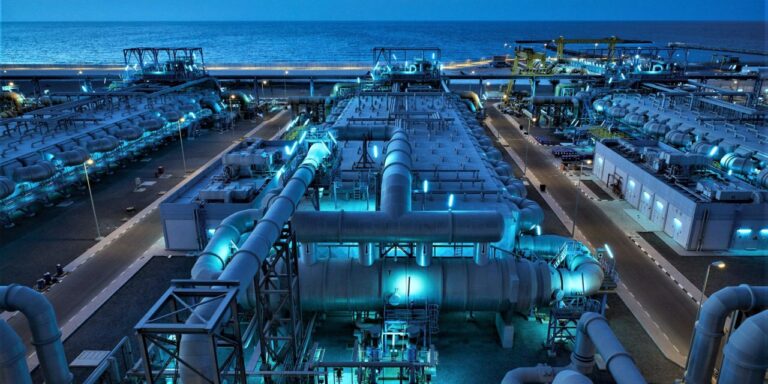
The SixPower technology opens up new and exciting possibilities for the desalination of seawater, offering a highly efficient and sustainable solution to one of the world’s most pressing challenges: access to fresh water. By leveraging low-temperature plasma electrolysis, SixPower provides a unique and cost-effective method for converting seawater into pure, drinkable water while also generating valuable byproducts that can be used in various industries.
Key Advantages of SixPower Desalination:
- High Efficiency and Low Energy Consumption:
- SixPower technology operates at low temperatures, reducing the overall energy consumption required for desalination compared to traditional methods like reverse osmosis or thermal distillation. This energy efficiency makes the process more economically viable and environmentally sustainable.
- Production of Pure Drinking Water:
- Through the plasma treatment process, seawater is broken down at the molecular level, separating salt and other impurities from the water. The result is high-quality, pure drinking water that meets the strictest standards for human consumption. This water also has improved physical properties, such as reduced surface tension, making it similar to natural sources like rainwater and dew.
- Generation of Useful Byproducts:
- In addition to producing fresh water, SixPower’s desalination process generates valuable byproducts, including hydrogen, metal oxides and hydroxides, and solutions of hypochlorites, chlorites, and chlorates. These byproducts have important industrial applications in energy, manufacturing, and water treatment sectors, creating additional economic value from the desalination process.
- Improved Water Properties for Agriculture:
- The plasma-activated water produced by SixPower is ideal for agricultural use, as it not only supplies pure water but also protects plants from pathogenic microflora. The water’s unique structure promotes better nutrient absorption and healthier plant growth, making it a valuable resource for irrigation in arid regions.
- Potential for Hybrid Systems:
- SixPower technology can be combined with other desalination methods, such as reverse osmosis, to create hybrid systems that further improve efficiency and scalability. By integrating plasma electrolysis with traditional methods, it’s possible to optimize water production while minimizing energy use and operational costs.
- Sustainable and Environmentally Friendly:
- Unlike chemical-based desalination processes, SixPower technology does not rely on harmful additives or produce toxic waste. The process is eco-friendly, contributing to the preservation of marine ecosystems and reducing the environmental impact typically associated with large-scale desalination operations.
- Flexibility for Various Water Sources:
- The SixPower system is highly adaptable and can be used for desalinating not only seawater but also brackish water, industrial wastewater, and other saline sources. This versatility makes it suitable for use in a wide range of environments, from coastal areas to inland regions facing water scarcity.
Promising Global Applications:
The innovative nature of SixPower technology presents enormous potential for addressing water shortages around the world. With its ability to produce large volumes of fresh water while minimizing energy consumption and environmental impact, SixPower is poised to become a key player in the global desalination industry.
This technology offers particularly promising solutions for:
- Arid regions and countries facing severe water shortages.
- Island nations and coastal areas with limited access to freshwater resources.
- Industrial sectors requiring desalinated water for processes while benefiting from the useful byproducts.
In conclusion, the desalination of seawater using SixPower technology represents a forward-thinking and highly sustainable approach to solving the global water crisis. With its combination of efficiency, eco-friendliness, and the generation of valuable byproducts, this technology is positioned to revolutionize the way seawater is converted into fresh, usable water for both domestic and industrial purposes.